
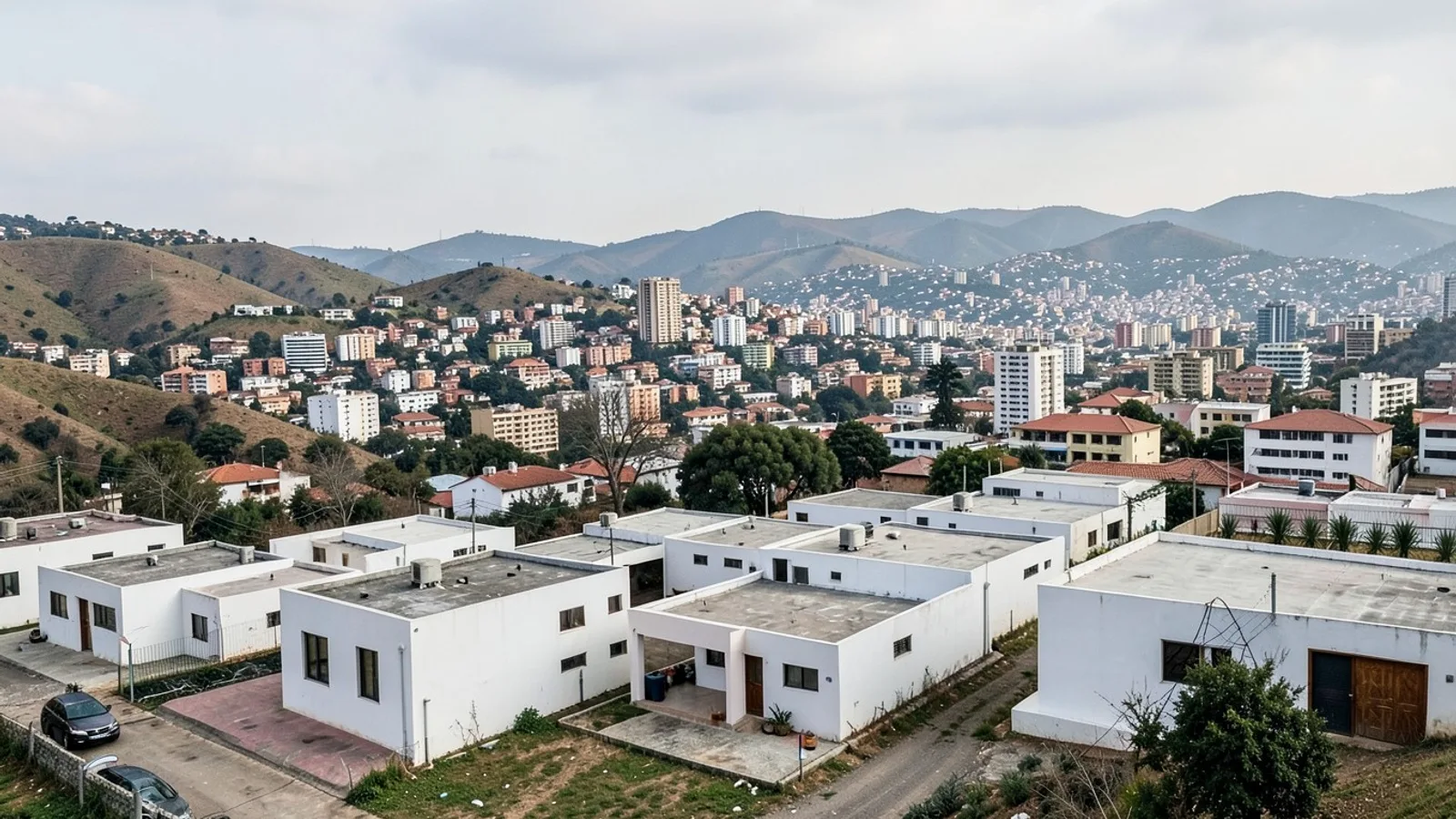
The acquisition, leasing, or legal regularization of real estate represents one of the most significant property milestones in the civil and financial life of any individual or business. In a major municipality in the interior of Minas Gerais, with a population of 761,835 residents, real estate transactions range from expanding urban subdivisions to established rural properties. In the face of complex contracts, tax certificates, and requirements before real estate registry offices, preventive legal counsel provided by a real estate lawyer becomes an essential tool to mitigate risks, safeguard financial resources, and prevent prolonged litigation within civil law.
Having the technical support of a professional in the real estate sector allows for a thorough examination of the asset's true legal standing before paying any earnest money deposit or signing binding agreements. The preventive work carried out by real estate lawyers encompasses a comprehensive audit of personal and title certificates, the review of contract termination clauses, the verification of encumbrances such as mortgages and attachments, and compliance with urban development regulations. When contractual disputes or defaults arise, specialized guidance ensures that all formal notices and legal proceedings are conducted in accordance with current Brazilian legal standards, protecting assets built through years of hard work.
Legal certainty in purchase, sale, and lease transactions
Negotiations involving the purchase and sale of real estate demand meticulous attention to contractual details, since possession or a promise of purchase does not transfer real estate ownership without proper registration at the real estate registry. The intervention of a real estate lawyer aims to thoroughly assess the property's chain of title, verifying whether the seller holds full legal authority to dispose of the property and ensuring there are no encumbrances or filings that could lead to the recognition of fraud against creditors or fraud against execution. A prior contractual risk analysis protects the buyer against eviction and ensures the seller balanced receipt of the agreed amounts.
In the residential and commercial leasing sector, contracts frequently contain abusive clauses or provisions incompatible with the Tenancy Act. The involvement of a specialized professional ensures that the agreement includes valid lease guarantees—such as security deposits, personal guarantees, or rent guarantee insurance—clearly defines official periodic adjustment indices, and establishes balanced obligations regarding improvements, as well as ordinary and extraordinary condominium expenses. In the event of repeated default or the need to repossess the property for own use, the technical management of formal notice and any eviction actions safeguards the landlord's rights without disregarding the statutory deadlines granted to the tenant.
Additionally, many real estate disputes stem from consumer relationships with construction companies and real estate developers. Delays in the issuance of the occupancy permit and the handover of keys, undue charges for brokerage commissions without express contractual provision, square footage delivered in non-compliance with the architectural plans, and the cumulative application of termination penalties require the joint application of the Consumer Defense Code and general civil rules. When repercussions from other legal spheres arise in the management of family or business assets, it may be necessary to consult a family lawyer to handle probate and asset division, or an employment lawyer if labor liabilities threaten to encumber the pool of assets.
Land regularization, adverse possession, and property possession
The existence of properties without clear title is a common reality in various regions of the country, generating legal uncertainty and preventing the full economic valuation of assets. The absence of formal registration prevents bank financing, complicates estate distribution during probate, and leaves occupants vulnerable to third-party claims. In this scenario, a real estate lawyer evaluates viable avenues for urban or rural land regularization, examining whether the situation meets the requirements for adverse possession, compulsory adjudication, or administrative regularization procedures.
Adverse possession, whether extraordinary, ordinary, special urban, or special rural, requires unequivocal proof of peaceful, uncontested, and continuous possession with the intent to own throughout the statutory period. The qualified specialist guides the gathering of robust evidence—such as continuous proof of municipal property tax (IPTU) or rural land tax (ITR) payments, invoices for renovations, private assignment of possession agreements, and witness statements from neighboring boundary owners—strategically deciding between the extrajudicial route directly before the real estate registrar or judicial proceedings before the courts when there is formal opposition from registered owners or adjoining neighbors.
Another important area of practice involves possessory protection. In cases of disturbance or dispossession, where the legitimate titleholder is prevented from freely exercising rights over the property, the prompt filing of repossession or maintenance of possession lawsuits, accompanied by an application for preliminary injunctive relief, aims to restore normalcy before the occupation consolidates over time. Technical guidance ensures that boundary descriptions, topographic coordinates, and descriptive memorials are perfectly aligned, securing the effectiveness of eviction orders and safeguarding the substantive rights in dispute.
Regional real estate dynamics and integration with neighboring cities
As a regional economic hub of great importance in the Triângulo Mineiro, Uberlândia centralizes a significant volume of real estate investments, horizontal condominiums, logistical warehouses, and agricultural operations that transcend its own geographic boundaries. The constant movement of people, capital, and business establishes strong territorial ties with neighboring cities, generating transactions where buyer and seller reside in different locations or own assets distributed across multiple municipalities in the region.
This territorial interaction frequently manifests in the relationship with Araguari, a municipality located just 31.6 km from Uberlândia. The acquisition of recreational country properties, small farms, and urban real estate is recurrent among families who maintain professional and residential ties between the two judicial districts. When disputes arise in exchange contracts, condominium fee collection, or disagreements over boundary demarcation between neighboring properties, the technical guidance of a real estate lawyer accurately establishes the rules of territorial jurisdiction for serving notices to the parties and conducting deed conveyance procedures.
Heading north, the connection with Tupaciguara, situated at a distance of 57.8 km from Uberlândia, involves distinctive characteristics related to the sale and leasing of agricultural land. Rural transactions established in this region frequently require complex livestock partnership agreements, rural leases for grain crops, and environmental regularization before official rural registries. Real estate counsel thoroughly examines the solvency of the parties and the absence of administrative embargos or tax liabilities on the negotiated plots of land, safeguarding the sound standing of the financial investment.
Likewise, the flow of business with Monte Alegre de Minas, 63.7 km from Uberlândia, encompasses both the industrial and logistics real estate market along transport routes and rural properties dedicated to livestock and agriculture. Disputes involving delays in formalizing definitive deeds, breach of contractual deadlines for delivering improvements, or the need to terminate purchase and sale commitments due to a loss of purchasing power are examined from the corresponding territorial perspective. Similarly, property claims originating in municipalities such as Nova Ponte, 68.5 km away, reflect the reach of the legal relationships established in this regional corridor.
For real estate litigation requiring review by the state judiciary, first-instance proceedings regarding Uberlândia are processed in the Judicial District of Uberlândia, whose central courthouse is located at Rua Rondon Pacheco, 6130 – Tibery, Uberlândia - MG, CEP 38405-142. It is at this judicial seat that conciliation hearings, engineering expert assessments to determine construction defects, and the adjudication of possessory and petitory lawsuits tied to its jurisdiction take place.
Criteria for document verification before closing a deal
The hasty signing of agreements or the transfer of advance amounts without proper document auditing is the primary cause of irreparable financial losses. To safeguard their rights, buyers and investors must adopt a rigorous preliminary verification procedure with the assistance of a qualified professional:
- Updated property registration certificate of full content and encumbrances: Obtain a certificate issued less than thirty days ago by the competent Real Estate Registry Office to certify whether the seller is indeed the legitimate owner and check for annotations of attachment, mortgage, fiduciary transfer, usufruct, or easements that prevent the free disposal of the property;
- Municipal tax clearance certificate (IPTU or ITR): Verify with the municipal tax authority whether the property has outstanding debts for taxes and fees, including waste collection fees and improvement contributions, since real estate tax obligations run with the property and fall upon the purchaser;
- Condominium clearance certificate: Require a formal statement issued and signed by the property manager or the condominium administration company, accompanied by the minutes of the manager's election, proving the absence of pending ordinary fees or reserve fund payments;
- Civil and tax enforcement clearance certificates of the sellers: Analyze the certificates from the civil and tax distribution registries of the State Court and the Federal Court, both for the judicial district where the property is located and the judicial district of domicile of all sellers, in order to identify lawsuits that could lead to the annulment of the sale;
- Labour and property unavailability certificates: Issue the Clearance Certificate of Labour Debts (CNDT) from the Labour Court and consult the National Asset Unavailability Registry to ensure there are no judicial restrictions blocking the transfer of the owners' assets;
- Urban planning and environmental feasibility review: In the case of acquiring lots or land, consult the parameters of municipal zoning, land use, and land occupation legislation, in addition to confirming the absence of permanent preservation areas or environmental restrictions impeding construction;
- Drafting a detailed preliminary contract: Structure the purchase and sale commitment by establishing conditions precedent, express deadlines for executing the public deed, liability for ITBI and notary fees, and proportionate penalties for any default;
- Interdisciplinary alignment in related matters: When there are simultaneous impacts involving social benefits, social security, or rural production history, consider the support of a social security lawyer or return to the homepage to view the overview of legal services available in the locality.
Strict compliance with this documentary checklist provides transparency to the transaction and affords the contracting parties the certainty that the invested amount will be legally protected against future contingencies.
Extrajudicial practice, contentious proceedings, and professional fees
Modern real estate law practice prioritizes the consensual resolution of disputes and the use of out-of-court instruments whenever feasible. The execution of public deeds, the formalization of contract terminations, boundary rectifications before notary offices, and extrajudicial adverse possession provide agility to proceedings without burdening court dockets, reducing operating costs for the interested parties.
However, when amicable negotiations are exhausted or when complex disputes arise over property rights, filing lawsuits before the State Court becomes indispensable. Frequent claims include judicial compulsory adjudication, commercial lease renewal actions, actions for termination of joint ownership with judicial auction of indivisible assets, collection of fines for breach of contractual deadlines, and compensation claims for property damage resulting from structural construction defects.
In client relations, clarity and integrity govern the setting of legal fees. In accordance with the ethical guidelines of the Brazilian legal profession, no real estate lawyer is ethically permitted to guarantee or promise a specific outcome in a judicial lawsuit or administrative proceeding, as decisions depend on the assessment of evidence and the sovereign judgment of the competent courts and bodies. The retention of legal services must be formalized through a prior written contract that specifies in detail the scope of work, the agreed payment schedule, stage-by-stage compensation, and expenses for certificates and court costs.
Secure connection with professionals through the platform
For those seeking qualified guidance on real estate matters with convenience and absolute confidentiality, the legal connection app provides a simplified and efficient mechanism. A person describes what happened in their own words, by voice or text, free of charge and without the need to log into the system beforehand. An automated assistant organizes this account into an objective case summary and routes the request to lawyers with compatible practice in the real estate field in their city.
The professionals maintain a published page where they present their practice areas and handle consultation requests through the platform. The choice of which professional to speak with rests exclusively with the user. All initial contact takes place in a private environment within the app itself, without prior disclosure of personal contact details, and the process only moves forward when both parties express explicit agreement to proceed.
If you need to review purchase and sale agreements, regularize property deeds and registrations, manage leasing issues, or resolve property disputes in Uberlândia and the surrounding region, describe your situation in the app to connect with a real estate lawyer, agree on fees in writing before work begins, and defend your interests with complete privacy and transparency, without any guarantee of results.
Uberlândia and surroundings
Lawyers who practise in Uberlândia also take cases from nearby cities.
How it works
- Tell the case
By voice or text, no sign-in. It takes a few minutes.
- The assistant organises it
Facts, dates and documents become a clear summary.
- You choose the lawyer
Professionals who practise in Uberlândia, in alphabetical order.
Legalocal does not recommend or rank professionals: the list follows alphabetical order.
Frequently asked questions about Uberlândia
When is it advisable to seek a real estate lawyer in Uberlândia?
Legal advice is recommended when negotiating a purchase and sale, reviewing lease contracts, dealing with delays in property delivery or pursuing adverse possession (usucapião) in Uberlândia, a Minas Gerais city of 761,835 inhabitants. People carrying out property transactions in the city or in the neighbouring municipality of Araguari, 31.6 km away, seek specialised guidance to identify registry issues and avoid unfavourable contract clauses.
What matters does a lawyer specialising in real estate law usually analyse?
This professional carries out preventive review of certificates, regularisation of land subdivisions, contract terminations, repossession actions and the annotation of deeds. Residents of Uberlândia and of nearby towns such as Tupaciguara, 57.8 km away, turn to this support to assess the situation of urban and rural properties before signing formal commitments or making significant payments.
Where are real estate cases for Uberlândia and the surrounding region heard?
Disputes within the jurisdiction of the State Court concerning properties in the area are heard before the Judicial District of Uberlândia, whose courthouse is at Rua Rondon Pacheco, 6130 – Tibery, Uberlândia - MG, CEP 38405-142. Parties from neighbouring municipalities, such as Monte Alegre de Minas, 63.7 km away, receive clarification on territorial jurisdiction and the procedural steps needed to defend their rights.
How can I contact real estate lawyers and how are fees agreed?
In the app, you describe what happened in your own words, by voice or text, free of charge and without logging in first. The assistant organises your account into a summary and directs the case to lawyers in the field in your area. The conversation is private within the platform and only moves forward if both parties accept, keeping your personal information protected until then. Fees are set directly with the lawyer and put in writing before work begins, with no promise of a guaranteed result.